
Blackbeard's Treasure
A legendary treasure that sets the world's most dangerous treasure hunt in motion.

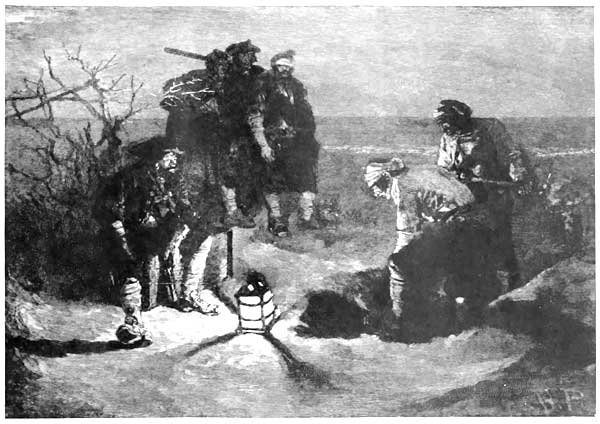
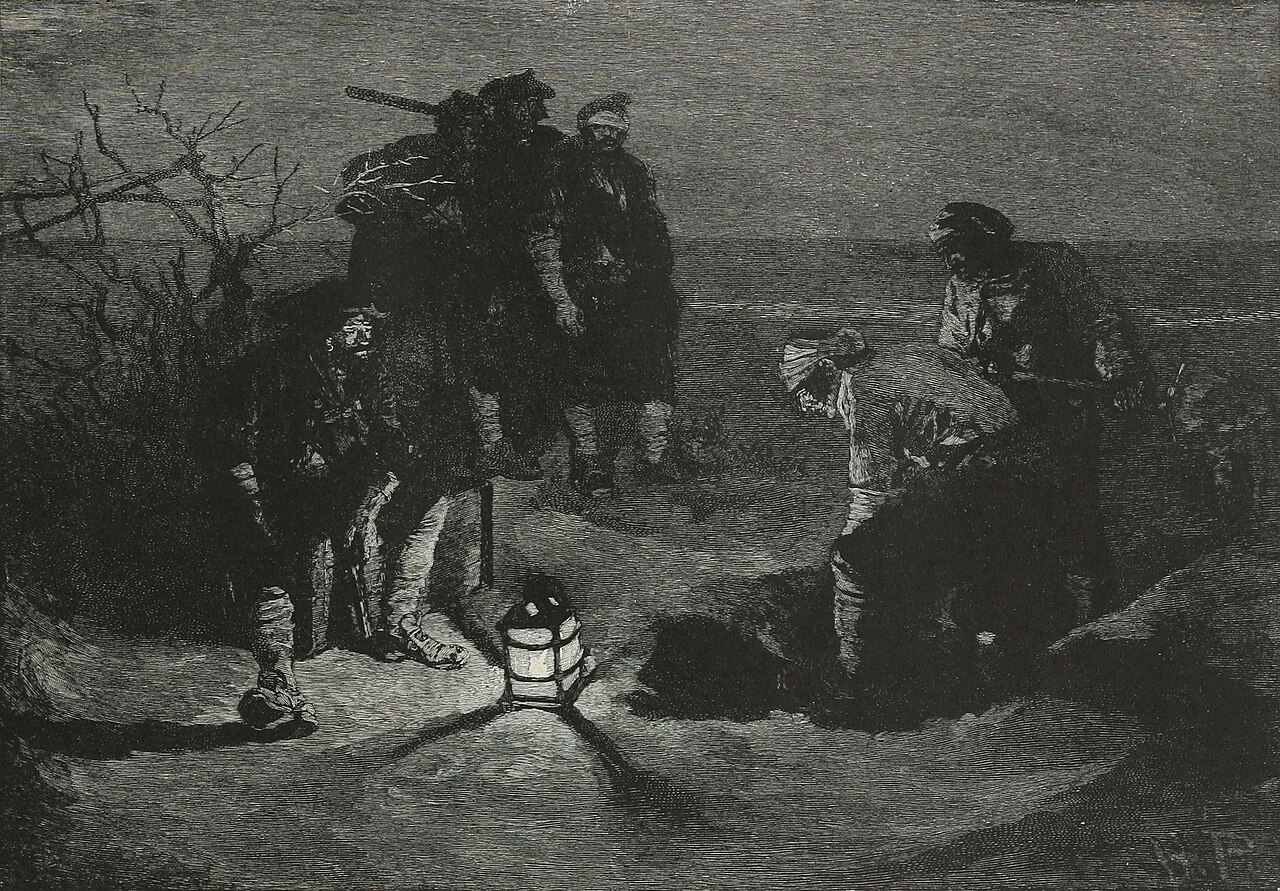
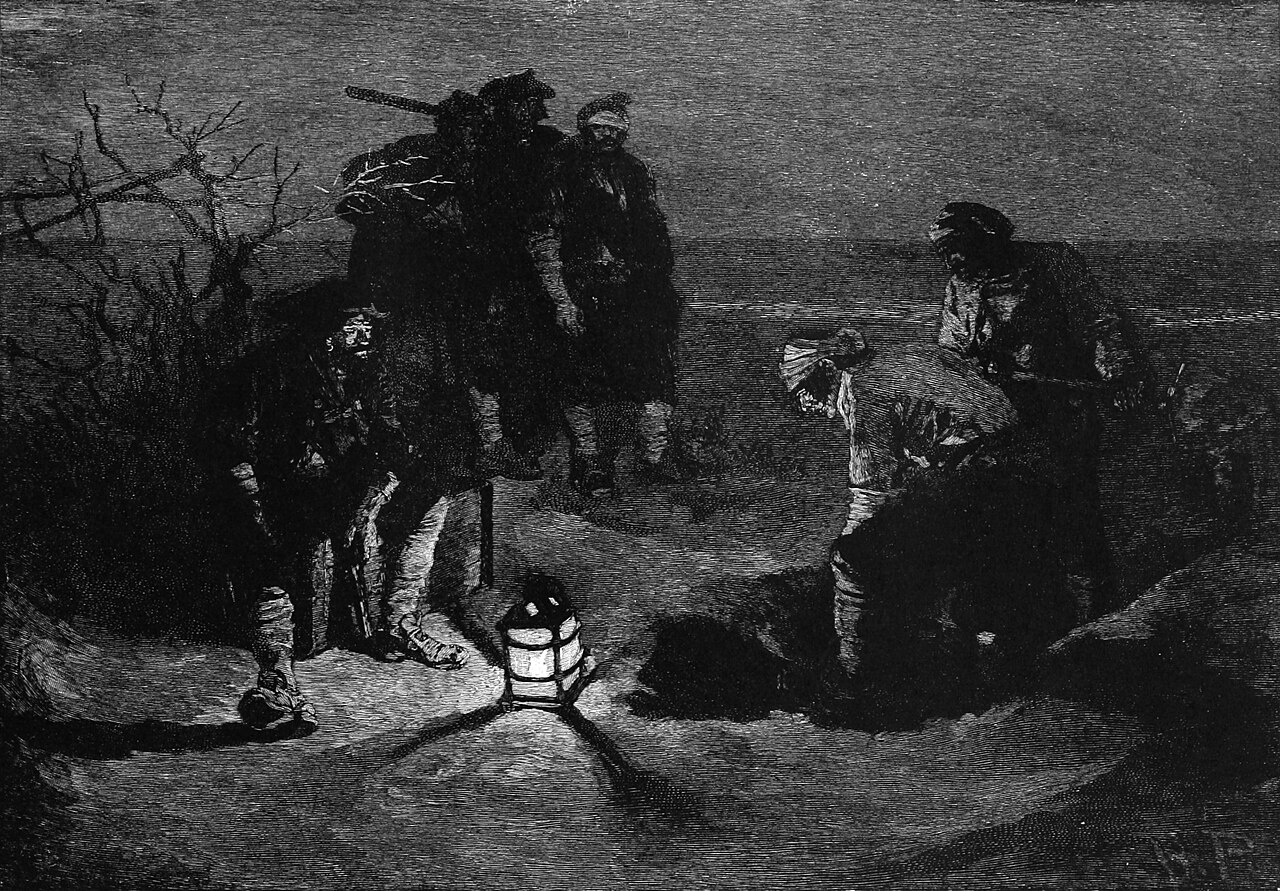
Howard Pyle · Public domain
It is a vast hoard of gold coins, jewels, and other valuables allegedly hidden by the 18th-century pirate Edward "Blackbeard" Thatch, and its discovery drives the entire narrative of the game. Unlike a collectible or upgradeable item, the treasure functions as the story's objective: every location, puzzle, and set-piece in *Uncharted 2: Among Thieves* exists to guide Nathan Drake and Elena Fisher toward its final resting place in the hidden city of Shambhala, while the antagonist Zoran Lazarević pursues it for his own ends.
- Type
- Narrative MacGuffin / Treasure Hoard
- First appears
- Uncharted 2: Among Thieves
- Developer
- Naughty Dog
- Platform
- PlayStation 3
- Associated historical figure
- Marco Polo (via the Cintamani Stone legend)
- In-game function
- Plot objective; final reward
Verified Timeline
Lore & Background
In the Uncharted universe, the treasure is treated as a concrete, locatable cache rather than a myth—a specific quantity of gold and precious stones that Thatch stashed away before his death and never recovered. In *Uncharted 2*, the treasure becomes the focus of a high-stakes race. Nathan Drake, a former thief turned treasure hunter, and his companion Elena Fisher, a journalist, follow a trail of clues that leads them from a remote island to a dense jungle and ultimately into the hidden city of Shambhala. Their rival, Zoran Lazarević, a ruthless Serbian war criminal with his own long-standing obsession with the hoard, is determined to reach it first and will use any means necessary to do so. The treasure's final reveal is deliberately anticlimactic in a thematic sense: after an extraordinary and deadly journey, the hoard is simply a mountain of gold and jewels in a dark cave. The narrative implies that the true cost of the hunt—loss, danger, moral compromise—far outweighs the material reward, a recurring motif across the Uncharted series.
In Their Own Story
The cave mouth gaped like a wound in the jungle wall, breath hot and mineral-thick. Elena's headlamp carved a pale wedge into the black, and beyond it, impossibly, the light caught and shattered into a thousand golden fragments. Gold. Tons of it. Coins stacked in drifts, jewels glinting in the silt, the whole floor a mosaic of stolen centuries. She turned to Nathan, expecting a grin, a quip. He just stared, jaw slack, the weight of every cliff they'd climbed and every bullet they'd dodged pressing down on his shoulders. Somewhere behind them, the river was rising, and the cave was about to become a very small room in a very large wave. He reached for her hand. She took it. Neither of them looked back at the gold.
Reader's Guide
Blackbeard's Treasure is not a pickup, weapon, or upgradeable item in the traditional sense. It is the narrative objective of *Uncharted 2: Among Thieves*, the thing every character is chasing from the first cutscene to the last. The player never "collects" it piece by piece. Instead, the game structures its levels—jungle traversal, cave exploration, vehicle sequences, and set-piece action—around the player's progress toward the treasure's location. Puzzle elements (decoding clues, navigating environments) serve as narrative bridges between action segments, all pointing toward the final cave. The treasure first becomes a named objective early in the game and is revealed in its physical form only in the climactic cave sequence. There is no variant, upgrade, or alternate version of the hoard; it is a singular, static prize that exists to be seen, not used.
Did You Know?
- The treasure is associated with the real-life pirate Edward "Blackbeard" Thatch, who terrorized the Caribbean and Atlantic shipping lanes in the early 1700s.
- In *Uncharted 2*, the treasure is revealed as a mountain of gold and jewels in the hidden city of Shambhala, deliberately anticlimactic to emphasize the cost of the hunt.
- The treasure is not a collectible or upgradeable item; it is the single narrative objective that drives every level and puzzle in the game.
- The antagonist Zoran Lazarević, a ruthless Serbian war criminal, is determined to reach the treasure first and will use any means necessary.
- The treasure's location is never marked on a map; players uncover it by following a trail of cryptic clues left by Blackbeard himself, including a hidden journal and a series of ancient markers.
The Hunt for Queen Anne's Revenge
Among the most significant treasure-hunting achievements of the late twentieth century is the 1996 discovery of the Queen Anne's Revenge, the flagship of the infamous pirate Edward "Blackbeard" Thatch. The search was led by Philip Masters (1937–2007), an American explorer whose company, Intersal, Inc., held a permit from the State of North Carolina to conduct underwater investigations. Remarkably, the wreck was not found while directly targeting Blackbeard's vessel; the team had been searching for the El Salvador when they stumbled upon the long-lost ship in November 1996. Masters' career extended well beyond this single find—he also served on the crew that salvaged HMS Feversham, a British warship lost off the coast of Nova Scotia in 1711. In recognition of his contributions, North Carolina honored him with the Old North State Award in April 2007, citing his outstanding public service to the state and its communities. Even after Masters passed away, Intersal persisted in its search for the El Salvador near Beaufort Inlet, underscoring the enduring drive that defines the treasure-hunting vocation.
Treasure Fleets and the Scale of Recovery
The world of sunken treasure is defined by a handful of extraordinary recoveries that dwarf most other finds. In 1985, American diver Mel Fisher (1922–1998) located the wreck of the Spanish galleon Nuestra Señora de Atocha, unleashing what became known as the Atocha Motherlode—an estimated $450 million cache containing forty tons of gold and silver, roughly one hundred thousand Spanish silver coins called pieces of eight, additional gold coins, Colombian emeralds, assorted golden and silver artifacts, and a thousand silver bars. A century of maritime loss found its most dramatic echo in 2015, when Brent Brisben and his crew brought to the surface $4.5 million in gold coins from the 1715 Treasure Fleet, doing so on the exact 300th anniversary of the fleet's sinking. These two events bookend the modern era of treasure hunting: one demonstrating the sheer volume of wealth a single galleon could carry, the other showing that even three centuries later, the ocean still yields its secrets to those patient enough to seek them.
Pioneers Who Mapped the Deep
Before any treasure can be found, someone must develop the skills, knowledge, and persistence to reach it. E. Lee Spence (b. 1947), born in Germany to an American spymaster, discovered his first five shipwrecks at just twelve years old and went on to salvage over fifty million dollars in artifacts. His archival research was instrumental in locating the wrecks of the side-paddle-wheel steamers Republic and Central America. Robert F. Marx (1936–2019), a pioneering scuba diver, was described by Spence as "the true father of underwater archaeology" for his groundbreaking work with sunken vessels. John Chatterton (b. 1951) identified the German submarine U-869 off New Jersey in 1991, a discovery that spawned the PBS NOVA special Hitler's Lost Sub, Robert Kurson's book Shadow Divers, and a 20th Century Fox film adaptation. Chatterton also logged over 160 dives on the SS Andrea Doria and, in 2008, co-discovered the wreck of the Golden Fleece off the Dominican Republic. John Mattera (b. 1962), certified as a diver in 1976, pioneered shipwreck exploration around New York and New Jersey, performing penetration and decompression dives long before technical diving had a name. Together, these figures built the infrastructure that made every subsequent treasure hunt possible.
A Lineage of Hunters: From Belzoni to the Modern Diver
The tradition of treasure hunting stretches back centuries. Giovanni Battista Belzoni (1778–1823), an Italian explorer and pioneer archaeologist, extracted the massive bust of Ramesses II, widely known as the Young Memnon, and arranged for its transport to England. He excavated sand from the great temple at Abu Simbel in 1817, opened the sepulcher of Seti I—a site still occasionally called "Belzoni's Tomb"—became the first person to penetrate the second pyramid of Giza, and was the first European in modern times to reach the oasis of Bahariya. Heinrich Schliemann (1822–1890), a German who championed the historical reality of Homer's places, excavated Troy and the Mycenaean sites of Mycenae and Tiryns, earning the title "father of historical archaeology." These nineteenth-century giants established the principle that patient, skilled investigation could pull lost civilizations from the earth. The modern divers who now comb the ocean floor for Blackbeard's lost cargo, the 1715 fleet's gold, or the Atocha's emeralds are, in a very real sense, the heirs of that same restless curiosity—simply working in a different medium, with different tools, but driven by the identical hunger to recover what history has swallowed.
Gallery
Frequently Asked Questions
What is Blackbeard's Treasure in Uncharted?
It's the massive cache of gold, gems, and other valuables that the 18th-century pirate Edward Thatch supposedly buried, and it serves as the central objective driving the entire plot of Uncharted 2: Among Thieves.
Where is Blackbeard's Treasure hidden in the game?
The hoard rests deep inside a remote, collapsing cave system, and Nathan and Elena must push through a chain of increasingly lethal environments to reach it.
Who is Blackbeard's Treasure named after?
It's attributed to Edward "Blackbeard" Thatch, the infamous 18th-century pirate whose legendary buried fortune forms the basis of the treasure hunt in Uncharted 2.
What role does Blackbeard's Treasure play in the story?
Rather than being a collectible or power-up, the treasure functions as the narrative MacGuffin—every puzzle, set-piece, and antagonist confrontation exists to either bring Drake closer to it or block his path.
Does Nathan Drake actually claim the treasure at the end?
No—after a harrowing escape from the collapsing cave, Drake and Elena walk away without taking the gold, choosing their lives over the fortune.
More in Items & Equipment
Related in Uncharted
Links follow this subject's own source article.
Elsewhere in the Uncharted universe
Spotted an error? Know more?
This is a living reference — every entry is fact-audited, and reader corrections feed straight into our audit queue. Suggest an edit · See this site's audit record